Trading psychology: a practical review routine
Keep a short record of the decision before you know the outcome. In review, compare the action with the plan. A lucky result can still come from breaking a rule you chose to follow.
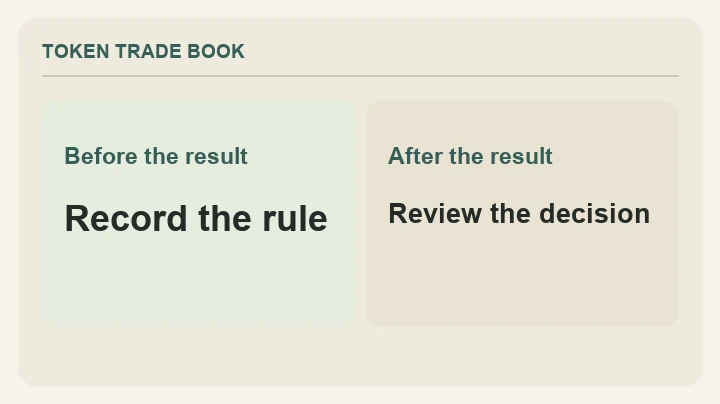
Keep a record before the result
Write down the plan’s conditions, known costs, what might invalidate the idea and whether the action is part of a simulation. Put the entry in your notes before you see how the example plays out. Afterward, compare the actual sequence with the written record rather than reconstructing a rationale.
Recognize a change in behavior
Imagine that after a loss you double the next position, even though your written example rules require the same size. Record the change as a deviation whether the next trade wins or loses. On the other hand, a loss while following a valid plan is information about the plan, not automatically a discipline failure.
Review in batches
Group cases by kind of decision: entries taken outside the rule, exits moved, size increased, or costs ignored. Look at a series rather than the last result. Try a concrete process change in simulation, such as writing the invalidation level before you advance the chart. Then see whether the specific deviation becomes less common.
Review a quiet stretch as well as a losing one
A journal can show deviations when nothing dramatic happens. An example entry outside a rule because the chart has been quiet still counts as a deviation even if the next move is favorable. Compare it with the same behavior after a losing example. Look for a trigger you can recognize before making the next decision.
When is the best action a pause?
If you cannot explain how the next action fits the plan, pause and document the missing information. A pause can be a deliberate decision.
Educational material. Examples are hypothetical.