Crypto trading for beginners: a paper-trading guide
Start with one example order book and follow a paper order from quote to fill. Record what you would have paid, the units that would have arrived and how fees change the result.
Learn the mechanics in a safe sequence
Identify the base and quote asset for one pair. Copy the best bid and ask and the quantity available at each. Simulate a market buy and a limit buy on paper with the same starting information. Record when an order would execute immediately, might wait, or could be partially filled.
Reconcile an example
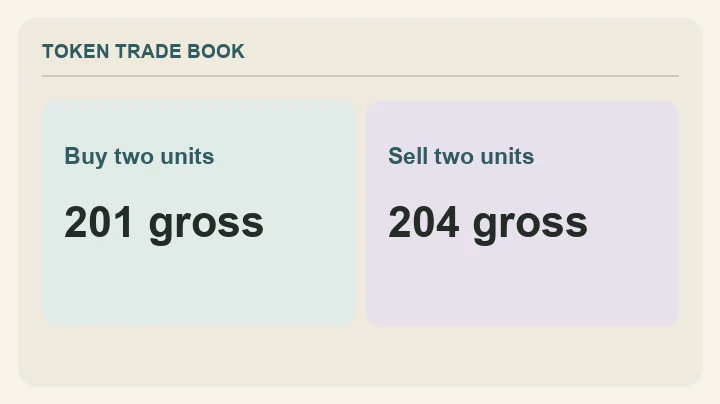
Suppose one unit fills at 100 and another at 101. The gross purchase cost is 201. If you later simulate an exit for both at 102, gross proceeds are 204 and the price-only result is 3. With total entry and exit fees of 2, the result is 1 before any additional cost. Compare your result with the single quote you wrote before the trade.
Write down how a plan can fail
Test what happens if price skips an exit, a posted order never fills, or an expected cost doubles. Record these cases as part of the exercise. Understand the mechanics and limitations of unborrowed spot before studying products that can force a close or draw on collateral. You do not need a funded account to complete these lessons.
Start with a complete paper ticket
Write the pair, time, side and intended quantity on one line. On the next, record price levels you would have needed to cross and the maximum price allowed by a limit. Leave any unfilled quantity on the record. The missing fill teaches just as much about how the order works as a completed entry.
What should I learn next?
Read the order types and slippage guides, then reproduce the numbers on a new example. Repeat until you can explain where every reported amount came from.
Educational material. Examples are hypothetical.