What is spot trading in crypto?
A spot trade exchanges one asset for another. A filled buy changes what you own or what the custodian owes you. Borrowed spot and derivative contracts carry additional obligations.
Read the pair before the price
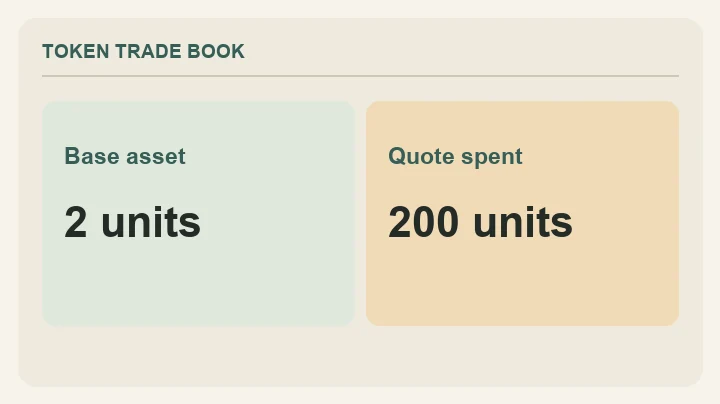
On a BTC/USD market, BTC is the base and USD is the quote. For a hypothetical pair priced at 100, a fill of two base units costs 200 quote units before fees. The fee may be charged in either asset or another supported currency. An exchange balance can still depend on custody and withdrawal rules.
Spot, margin spot and swaps
An unborrowed spot trade uses assets already available. Spot margin introduces borrowed assets, interest and potential forced closure. An on-chain swap exchanges assets through a protocol and may involve network fees, route changes and minimum-output protection. It does not necessarily use a public limit-order book.
Compare the amount you actually receive
Compare ways to exchange the same pair by the quoted total, fees, spread and resulting units received. An easy conversion screen can quote an all-in amount with no separate visible limit order. For an order-book fill, export each fill so you can reconcile the outcome to your balance.
Read the confirmation in base units
A receipt might show two units purchased at 100 and a fee of 0.01 base units. With that fee set-up, 1.99 base units arrive even though the fill quantity is two. If the fee were instead denominated in quote, the base amount could remain two and the quote debit would rise. Check the fee currency before reconciling.
Does spot ownership eliminate risk?
An unborrowed spot position still carries price, counterparty, custody and operational risks. Unborrowed spot avoids derivative funding and the automatic liquidation mechanics that come with a margined position, but the asset can lose value.
Educational material. Examples are hypothetical.