Leverage and margin in crypto trading
Leverage compares the size of a position with the equity supporting it. A 5% adverse move on a 5× linear position costs roughly 25% of the original margin before fees and any rule changes.
Separate collateral from the position
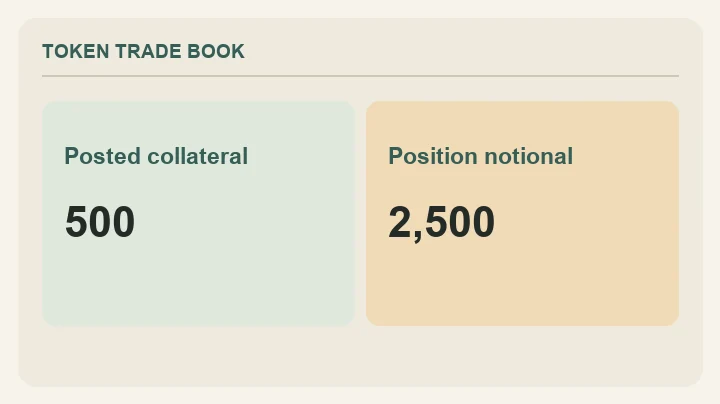
A hypothetical 500 collateral base supporting a 2,500 linear position represents 5× leverage at entry. A 4% adverse move on the exposure is a 100 loss before fees, or 20% of that initial collateral. A 4% favorable move has the opposite gross effect. The asset’s own percentage move is unchanged.
Why the liquidation level is not one divided by leverage
Maintenance margin, fees, mark price, risk tiers and collateral changes all affect forced closure. The simple reciprocal gives a rough intuition, not a usable liquidation estimate. Portfolio positions using shared collateral introduce more variables. Track notional and collateral separately as they evolve.
What raises effective leverage
Losses can shrink equity while gross exposure stays substantial. An added position, correlated collateral decline or withdrawal can also alter the risk picture. A slider on an order form expresses an initial configuration, not a permanent ceiling on exposure relative to equity.
Recompute leverage after the first loss
A linear long opened at 2,500 notional with 500 collateral starts at 5×. After the position value falls by 100, remaining equity is 400 and current notional is 2,400. Effective leverage is now 6×. This example excludes fees and changes to margin rules, which may reduce the remaining buffer further.
Is posted margin a maximum loss?
Do not treat it as one. Product terms, cross collateral, fast execution conditions and any applicable protections determine the actual outcome.
Educational material. Examples are hypothetical.