Initial margin vs. maintenance margin
Initial margin is the requirement for opening or adding to a position. Maintenance margin is the threshold for keeping it open. If the account falls below maintenance, the venue can trigger a risk response.
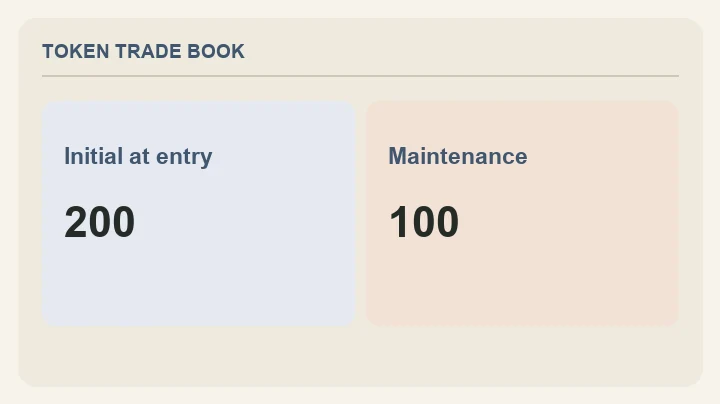
Compare requirements at the same notional
Suppose an illustrative 2,000 position requires 10% initial margin and 5% maintenance margin. That means 200 to open and 100 as the example maintenance requirement. If equity falls from 200 to 130 and the requirement stays 100, the buffer is 30. Real requirements can be dynamic.
Money reserved is not the same as equity
Open orders can reserve collateral. An account dashboard may display total equity, available margin and required maintenance separately. Looking only at available funds can misstate how near a position is to a margin breach, especially when exposure is shared across the account.
Read tiers and account definitions
A venue can raise margin rates for larger positions or assign different risk weights to collateral. Check whether the displayed percentage is margin requirement divided by equity or its inverse. Different conventions can make an identical number look safer on one interface than another.
Read available margin next to maintenance
An account can show positive equity while an open order ties up much of the free amount. Compare the maintenance requirement with the venue’s definition of margin equity, then check reserved margin separately. Comparing maintenance with the withdrawable or available balance can give the wrong impression of a liquidation buffer.
Does adding margin reduce exposure?
Adding eligible collateral can change the equity buffer, but it does not reduce position notional. Closing part of the position changes exposure and may also change the requirement.
Educational material. Examples are hypothetical.