Cross margin vs. isolated margin in crypto
Cross margin can draw on a pool of eligible collateral shared with other positions. Isolated margin uses the collateral assigned to a particular position or bucket, subject to the venue’s rules and any automatic top-ups.
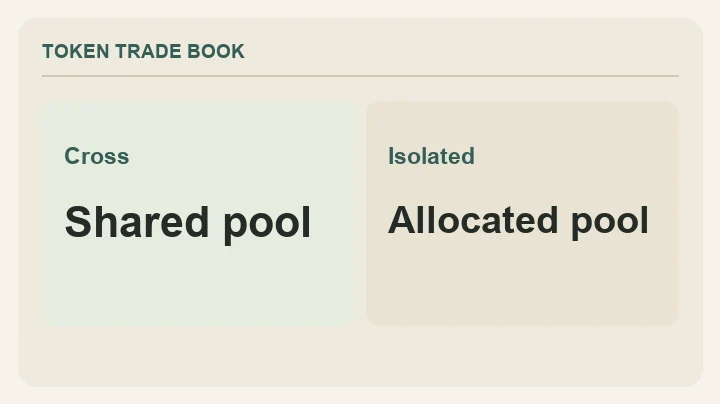
The same loss reaches accounts differently
Imagine 1,000 account collateral and a position allocated 200 in an isolated bucket. In cross mode the venue may draw from more of the eligible balance to support the position, subject to other obligations. In isolated mode the specific bucket is used under the product rules. A separate position is affected differently under shared and isolated definitions.
Check for automatic transfers
Some products offer automatic top-ups. The switch changes whether idle balance can be transferred into an isolated position. Review what risk mode applies to open orders, fees and multiple positions. The exact term “isolated” does not guarantee that every asset is legally or operationally protected from all other account risks.
Compare modes as a stress test
Write down collateral, notional, what else shares the pool, and what happens if two positions lose at once. A broader pool may delay forced closure while exposing more collateral. A narrower pool can be depleted sooner. The useful comparison is the set of funds at risk and how the venue responds.
Stress both positions at once
Suppose two positions draw from one eligible balance. When both move against the account, their losses can reduce the same cross-margin pool concurrently. When reviewing isolated buckets, verify whether automatic top-ups are enabled before assuming unused balance is outside the example. The venue’s liquidation process governs how it handles each bucket.
Can I switch while a position is open?
The answer varies by venue and position state. Check rules for open orders, collateral requirements and any changes to the liquidation estimate before relying on a switch.
Educational material. Examples are hypothetical.