Last price, mark price and index price
The last price is the most recent trade. The index is a reference market value. The mark is a separate venue calculation that can drive risk checks even when the price chart shows the last trade.
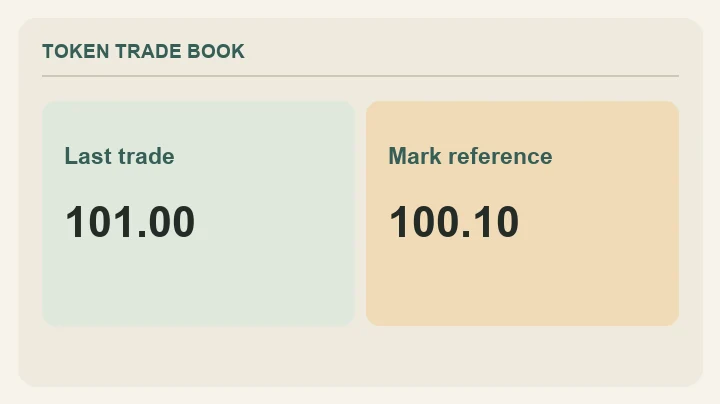
One instrument, three values
A perpetual might show last 101, index 99.90 and mark 100.10 at the same instant. The last trade reflects a matched transaction. The index can combine prices from designated spot markets. The mark can adjust the index or apply another venue formula so that an unusual tick does not automatically drive every risk calculation.
Know which price the control uses
A product may use mark price for unrealized PnL or liquidation while a chart draws last trades. A stop can use a selected trigger type. Check the contract and compare the timestamps. A screen showing different numbers need not be broken: each value can answer a distinct question.
The impact on a hypothetical exit
If the risk engine marks a position at 100.10, that does not mean counterparties will trade at that price. Exit fills are determined by actual liquidity and order terms. When explaining a result, save the mark snapshot separately from the executed fills and applicable fees.
Read a trigger without guessing from the chart
Suppose a stop watches the mark while the chart plots last price. A last trade at 95 can be visible while the mark remains 96, so a mark-based stop at 95 has yet to trigger. If the mark later reaches 95, the resulting order still executes against available liquidity under its own terms.
Can the index go stale?
It can face missing or disrupted inputs. Venues may have fallback logic. Read how they handle delayed prices, outliers and exchange outages.
Educational material. Examples are hypothetical.