How do you find your USDT wallet address?
Open the destination wallet or exchange, choose Receive or Deposit, select USDT, and select the network the sender actually supports. The displayed address is the destination for that route, with a separate memo if the service asks for one. USDT has more than one network, so “send me your USDT address” leaves out a detail both parties need.
Start where the funds should arrive
Ask the other side to identify the sending network. On your own device, check whether your wallet supports receiving USDT on that network. Find the fresh deposit screen and copy the address with its built-in control. Wallet setup and eligibility differ. If your app cannot receive on the sender's route, choose a supported route jointly before either side moves funds.
Give the sender the whole deposit instruction
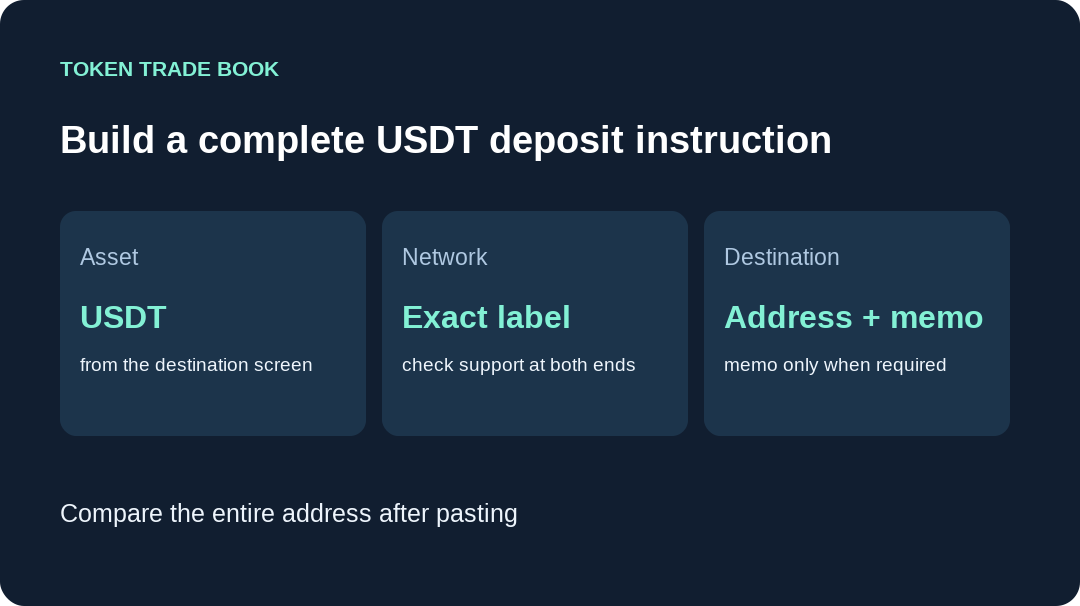
Share the asset, exact network, address, and any memo or tag required by the recipient. Send these over a channel where the recipient's identity can be verified. Include the venue minimum if one applies. You can share a public receiving address, but you should never include a recovery phrase, private key, password, or authentication code.
Know which address you are looking at
A token contract or mint marks the identity of a token. A wallet receive address identifies the transfer destination. An explorer may additionally show an address that belongs to a venue's hot wallet. The issuer's contract list and a past transaction are both poor places to obtain your current exchange deposit address.
Check the copied address and the network
Compare the entire address against the receive screen or hardware wallet display when applicable. A copied prefix and suffix can be imitated. Treat the network label separately, because EVM-compatible networks can use identical-looking addresses while a service only recognizes one route. If a test is feasible, make sure the amount received clears the deposit minimum and wait until it credits.
If the address changes or the balance does not arrive
Start again from the authenticated deposit screen. A service may rotate an address or change network availability. For a missing transfer, keep the withdrawal record and use the transaction identifier to determine whether the correct token and destination appear on the right chain. A deposit that went to an unsupported route may not be recoverable.