What is address poisoning, and how do you avoid a wrong withdrawal?
Address poisoning places a lookalike address in a wallet's or explorer's history so that a user copies it for a later transfer. The entry might appear after a zero-value or tiny transfer. Its appearance alone does not establish that someone accessed your private keys. The danger is trusting history as an address book when you next send.
Recognize the trap before opening withdrawal
The sender may arrange for a misleading entry with a familiar-looking prefix and suffix. An abbreviated display is useful for scanning but cannot confirm the recipient. Looking up the same address in the same poisoned history only confirms that the entry is present.
Get the destination from an independent source
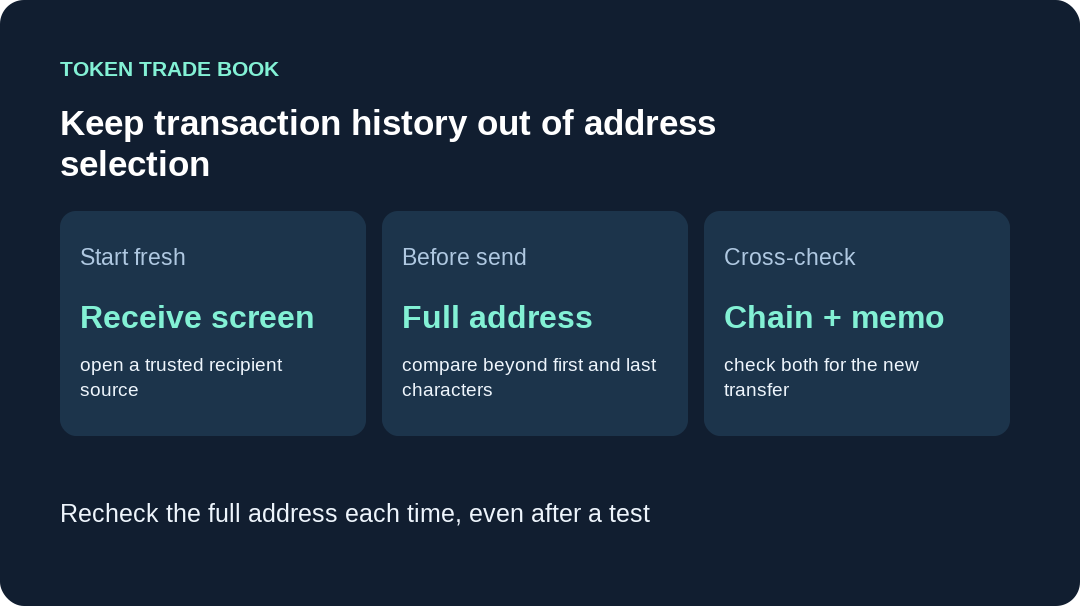
Open the recipient's current receive or deposit screen or use an address book you already verified. When sending to another person, confirm the receiving details over a separate trusted channel if the proposal was unexpected or the address changed. Compare the complete address in the withdrawal preview, the selected chain, and any memo the destination requires. For a hardware wallet, compare with the device's display when supported.
Use a test without trusting it twice
A test transfer can confirm that the recipient accounted for the particular transfer. Check the venue minimum and deducted fees first. Before the larger transfer, reopen the verified receive instructions and recheck the entire destination. A test can succeed and the next transfer can still go wrong if you select a different history entry.
If you spot a suspicious entry
Leave the address out of your address book and check the relevant chain history if you need to understand what appeared. Do not interact with an unsolicited token or URL for the sake of removing an entry. Wallets may offer ways to hide suspicious activity. If you already sent funds to a wrong destination, capture the original address, chain, transaction identifier and amount, and contact the platform through official support. An on-chain transfer often cannot be reversed.