What is open interest in crypto?
Open interest counts derivatives contracts that are still outstanding. Trading volume counts activity during a period. One new long matched with one new short adds one contract to open interest.
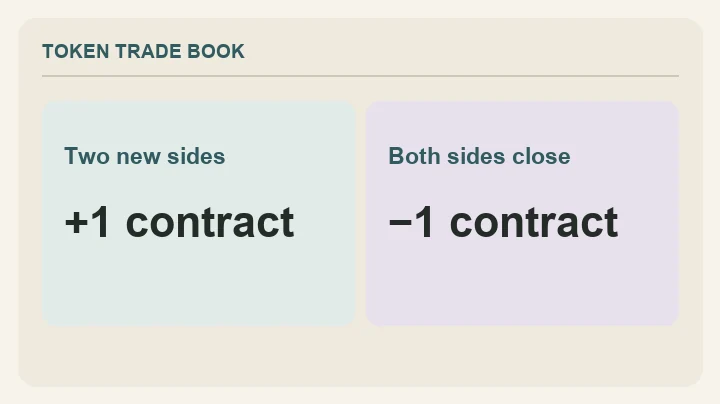
Opening and closing can offset
Suppose one new long trades with one new short for one contract. Open interest increases by one, not two. If one existing participant closes against a new entrant, the contract effectively changes holder and open interest can remain unchanged. When an existing long and short both close against each other, the count falls.
Contracts and dollar value tell different stories
An analytics page may show contracts, base-asset quantity or notional dollars. With the same number of BTC-linked contracts, a higher BTC price can lift dollar-valued open interest. Align units and contract types before comparing venues. Aggregation can include different symbols and reporting windows.
Combine it with price and volume carefully
A price rise with higher open interest can suggest growing outstanding exposure, but every contract has two sides. This observation alone cannot tell which side initiated trades or whether participants are hedged elsewhere. Compare changes in contracts, volume, funding and actual information about liquidity.
Identify the unit before comparing feeds
If a feed counts one-unit contracts, 100 open contracts at a reference price of 50 represent 5,000 notional. At 60 the figure can rise to 6,000 with the contract count unchanged. Mark the currency and contract multiplier before calling a rise in dollar open interest new positioning.
Does high open interest mean deep liquidity?
Check the book for depth. A large number of open contracts does not tell you how much would fill at a given price.
Educational material. Examples are hypothetical.