Double bottom pattern: where the W actually confirms
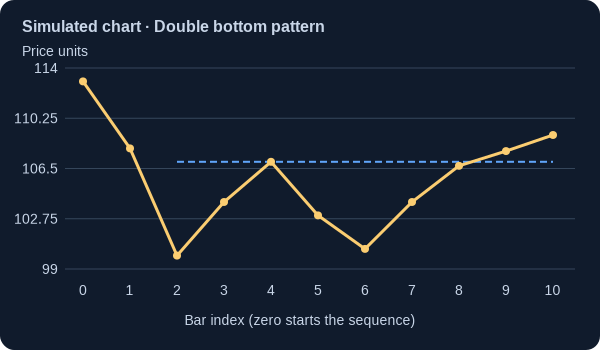
A double bottom looks like two attempts to break the same low after a decline. Under a close-based rule, the W is only a candidate until price closes above the rebound high between the two bottoms. The two lows can be close without being identical.
How do I distinguish two tests of a low from an ordinary bounce?
Use swing lows defined before looking at the outcome. A simple study can require two higher lows on each side of each candidate swing low and lows within 1% of each other, measured relative to their average. The two-bar rule means a swing is known two bars later. Draw the neckline at the intervening high and decide whether your rule needs a close above it or an intrabar trade through it.
Worked example with simulated prices
A hypothetical market falls from 113 to 100, rebounds to 107 and drops to 100.5. The lows differ by about 0.50%, so they fit the 1% tolerance. A bar that trades to 108 and closes at 106.7 still leaves the pattern unconfirmed. If a later bar closes at 107.8, it passes the close-based rule. A return below 107 can be logged as a failed breakout under a separately defined rule.
Apply the rule to a second observation
Two lows are 100 and 102.1. Their distance is about 2.08% of their mean, so they would fail the example’s 1% tolerance even if a W is visible. Changing the tolerance should be a deliberate rule change across the whole sample.
What the chart can establish
The height from the lower low to the neckline is 7. Projecting it from 107 gives 114. That is a measured move convention. Price can reverse before reaching it, and the distance says nothing about frequency or costs. An original replay should log candidates that never confirm alongside confirmed breaks and subsequent failures.
Compare the sequence with chart patterns and specify your breakout rule.
Sources
- Investopedia’s chart-pattern reference — Common visual definition and measured move convention.