MACD strategy in crypto: a paper-testing guide
A basic MACD rule can watch for a confirmed cross of the signal line, then assume execution at the next possible fill. Record fees and repeated crossings in sideways conditions before drawing conclusions.
Distinguish the crossings
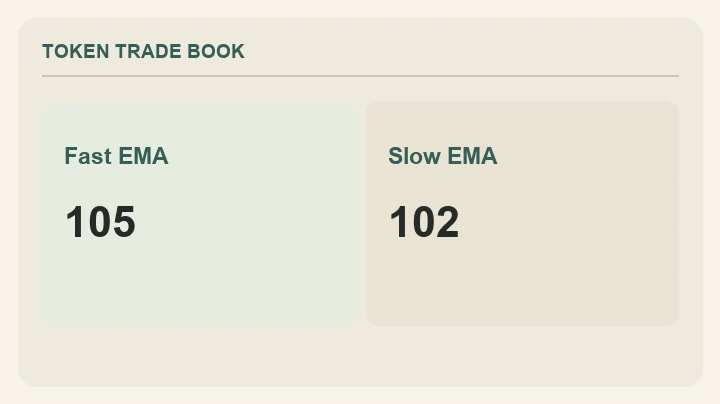
A MACD zero-line cross says the fast and slow averages have switched order. A signal-line cross compares MACD with its own smoothed line. The two events need not coincide. Default periods are common conventions, and changing the interval changes the amount of clock time represented by each lookback.
Compare a simple rule with a baseline
A test should specify when a cross is confirmed, how the next fill is modeled, and how fees are applied. In a narrow range, frequent flips can create repeated adverse costs. Record results by market condition and keep a hold-out period for a rule selected on earlier data.
A MACD paper test with a defined signal
For one example, record a bullish cross only after the candle closes with MACD above its signal line and the preceding close was at or below. Assume entry no earlier than the next bar, and apply a consistent exit rule and fees. Compare it to a separate test based on zero-line crosses. Log choppy periods where several signals fire close together.
Can MACD and two moving averages confirm each other?
They can be related views of the same data. Because MACD is derived from moving averages, agreement does not provide independent evidence by itself.
Educational material. Examples are hypothetical.